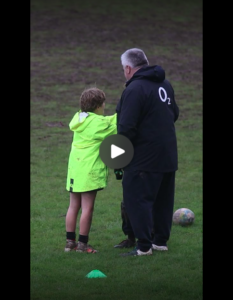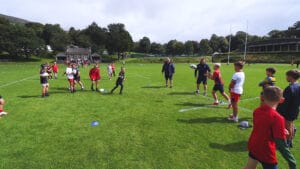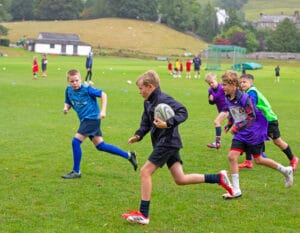
A 32-second clip from a Sedbergh Courses rugby session became an international talking point in 2022. But behind the moment that travelled around the world was something more enduring: the quality of the coaching environment in which it happened.
Sedbergh Courses brings together inspiring coaches with deep experience of teaching, developing and supporting young people through sport. Their work goes far beyond technical instruction. At its best, coaching creates an environment in which young people feel trusted, supported and confident enough to challenge themselves — and to look out for one another.
That was captured unexpectedly when two boys, who had known each other for little more than a day, were filmed supporting one another during a rugby session. It was picked up by the BBC, The Times and international media from New Zealand to India, while England Rugby, the All Blacks, Olympics and even Justin Bieber were among those who shared their admiration for what they saw.
For Sedbergh Schools Group, the moment was a powerful reflection of the expertise and values our Courses coaching team bring to their work. In this interview, coach Graham ‘Higgi’ Higginbotham reflects on what happened, why the moment resonated so widely and the responsibility coaches have for creating environments built on trust, respect, resilience and kindness.
Do you remember that moment in April 2022 and what was happening?
I’ll remember it for the rest of my life.
It was a typical Sedbergh day. It was Easter, cold, wet and muddy. Jack had come over from Singapore and didn’t have enough kit, so I’d been rummaging around finding things for him to wear. Alex, our videographer, came up and said, “Put this on.”
I said, “What is it?”
“It’s a microphone.”
I’d never worn one before. I put it on and then completely forgot about it. We were playing a game and it was getting a little bit testy. Someone went past Bob and Bob lost it. Jack went straight over.
I didn’t say anything. I just let him finish what he was saying. Then another boy came across and asked Bob if he was all right. And that reinforced everything for me.
Bob and Jack had only met on the Monday. You would have thought they were best mates, but they’d known each other for about a day and a half. It was the environment we had created – the environment we played in and the environment in the House. There was trust and there was empathy. That environment allowed it to happen.
When did you realise the moment had been captured?
I didn’t think anything of it at the time. We finished and carried on playing. Alex came over and asked for the microphone back and I just got on with the day. Later, Jason [Director of Courses] showed me the clip. I watched it and thought it was brilliant, but it was also what you expect to see. You see young people support one another all the time. That’s why peer-to-peer support is so powerful. Your mate comes up to you – somebody you’ve only known for 36 hours – and says, “Come on, mate. You can do this. You’re a good player.” Then you walk away and get on with it.
When you watch the clip now, does it capture something about your philosophy as a coach?
Definitely.
I like creating an environment where everybody feels safe and trusted, where there is respect, people work hard and they’re able to be creative. From a psychological point of view, I never want somebody to feel threatened. I want them to feel looked after, warm and part of what we’re doing. I want them to know they can ask questions.
That safe environment gives them the confidence to express themselves and to believe they can try things.
Why do you think that particular clip connected with so many people?
I think it is the honesty of two young boys supporting each other. People didn’t know them. They just saw one boy saying something really positive to another boy who needed it at that moment.
Some people wondered whether it had been staged. It wasn’t.
I think people recognised something very simple in it: somebody helping somebody else. That’s one of the great things about sport. I’ve got friends through rugby whom I’ve known for 40 years. People saw two boys supporting each other and I think that’s why it resonated.
How much responsibility does a coach have for modelling the behaviour they want to see from young players?
A massive responsibility.
Young people pay more attention to what we do than what we say. They watch how you behave and how you react. So as coaches we have a duty to show respect, resilience and kindness ourselves. They need to see those qualities in us first, that is where trust begins. We’re role models. We should be helping people, teaching them, developing their confidence and helping them become the best person they can be through sport.
Once you start showing those behaviours, they become peer-to-peer behaviours as well.
So was the behaviour in that clip partly the environment being reflected back at you?
That’s it. That clip is a product of that environment – the coaching behaviours, the coaching craft and the pastoral care.
It’s the same off the pitch. If we’re staying in somebody else’s House, for example, we talk about respecting it because normally that is somebody’s home. You don’t have to be heavy-handed. You talk to young people and explain why. Coaching is about creating the environment.
Is it a learning environment? Are people progressing? If they aren’t, don’t immediately look at them. Look at yourself as the coach. You might need to change the way you’re communicating or the way you’re teaching.
Ultimately, you’re trying to create an environment built on trust, kindness and understanding. That is what allows moments like that one to happen.